

Looking further with telescopes
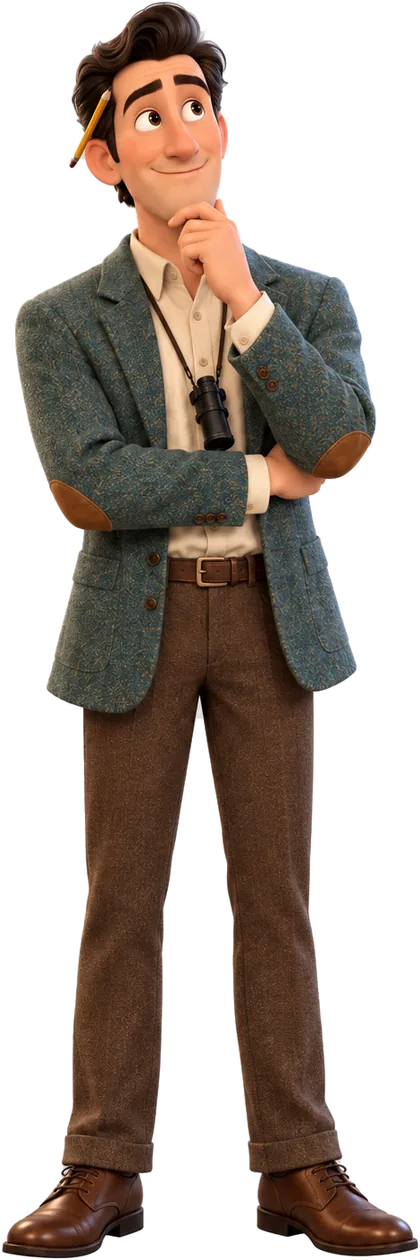
Hello, I'm Mr Hubble, and I teach space at Classfern. I'm named after Edwin Hubble, the American astronomer who showed in the 1920s that some fuzzy patches in the night sky were actually whole galaxies far beyond our own Milky Way. A famous space telescope was later named after him.
Telescopes work by collecting much more light than our eyes can. The bigger the lens or mirror, the more light it gathers, so we can see fainter and further things. In 1610 Galileo Galilei used his small telescope to discover four moons going around Jupiter, which changed how people thought about the universe.
You don't need an expensive telescope to start. Even a pair of ordinary binoculars shows craters and mountains on the Moon, and on a clear, dark night you may spot Jupiter's bright moons as tiny dots in a line.
Here's how to get the best view:
- Choose a clear night and get away from bright streetlights if you can.
- Give your eyes about twenty minutes to adjust to the dark.
- Rest your elbows on a wall or fence to keep the binoculars steady.
- Look along the edge between light and dark on the Moon, where craters show best.
One very important safety rule: never look at the Sun through binoculars or a telescope, not even for a moment, as it can permanently damage your eyes. Children should always stargaze with an adult nearby, especially outside after dark. Teachers can set Moon-watching as homework, and families can make it a cosy evening adventure.
Space at Classfern. More from Mr Hubble